"GOD F***ING DAMN IT" Ads
How To Build Million-Dollar Crisis Moment Ads

One of the best marketing lessons in history comes from calling old dudes that bought dick pills.
Gary Halbert, one of the greatest direct-response copywriters who ever lived, had a 20-year-old Irish kid called Caleb O'Dowd living with him.
Caleb had harassed, stalked and begged Halbert to train him. When Halbert finally stopped telling him to F-off and gave in, Caleb got his first task. He was probably expecting a secret headline formula.
Instead, Halbert handed him a list of 100 older men who'd bought one of his erectile dysfunction products. His job: call every one of them and ask why they bought.
Caleb made the calls. And what he found wasn't what anyone expected.
These men weren't buying for performance. Most had been married for decades. They bought because they felt guilty. Guilty that they weren't attracted to their wives any more, and guilty about what that was doing to her.
Every ad in that category was selling to his ego: GET HARD. GO HARD. But the money was coming from his conscience.
That one finding is a whole new market. A different ad, a different first line, a different face on screen, and a different buyer: the man who'd only ever click on a "performance" ad reluctantly, but will stop dead for a story about his wife and solving HER PAIN of not feeling loved.
Nobody tells their friends that. Nobody posts it on Reddit (or if they do, AI ain't finding that shit). Caleb didn't need talent to find it, he just needed a phone and a little discomfort to make the actual calls.
Why this matters to you
You've got a few ads keeping the whole account (business) alive.
You see this in 9-figure accounts... they touch $200k/day in spend, then drop back to $100k/day.
All because they hit a wall with bringing in new people.
And ads can die for reasons that have nothing to do with you.
One regulation.
One Meta rule.
One copyright claim.
One cure claim by a junior creative strategist.
One damn post from two years ago and your ads get shut off!! META WHY!!!!
Your MOFU and BOFU are probably fine. Anyone can grab your reviews and pump out testimonials and offers. The hard part is the top: ads that make someone who's never heard of you care. That's what this article is about. Finding the Caleb-style truth inside your business and turning it into those ads, on purpose.
Why listen to me? I've spent a long time in direct response. A few of the results: turned under $1M in ad spend into $100M+ LTV ($30M+ profit and counting) for one client over 15 years, running it on my own. A 10+ year undefeated campaign that was the final control before a 9-figure acquisition. And when a $300M email agency was brought in to replace my welcome flow, mine beat theirs by 2x.
Meta ads are a gamble. So we gamble like a VC. But with a spread of strategic bets, picked from active research, so the hit rate's higher. Hunting for those unicorn ads that pump from $10k-50k/day, birth easy iterations, and let you get back to normal sleep... well, our normal sleep -- with just that low-grade permanent stress of being responsible for feeding hundreds of employees' families. lol
Most ads only talk to people already shopping
Here's what ads in your feed are actually saying right now:
“Your breakthrough awaits.” (Mindbloom)
“Flatten belly, feel invincible.” (Mars Men)
“Look younger, longer.” (Paula’s Choice)
“The dating app designed to be deleted.” (Hinge)
Strip them back and nearly every ad is selling health, wealth or relationships.
But that's only what people say they want. There's the reason someone buys, and the reason they tell themselves.
She says she wants to lose weight to be healthier. What she wants is to stop feeling old before her time. He says he wants a better marriage. What he wants is for his wife to look at him with respect again.
Most ads sell the first half. That's great… IF your customer already knows they want to buy. But most people don't know a thing about you. So when you say "make money", or "lose weight", or "PROTEIN WATER", nobody cares.
Here's Mindbloom, at-home ketamine therapy for depression. These are their live ads.
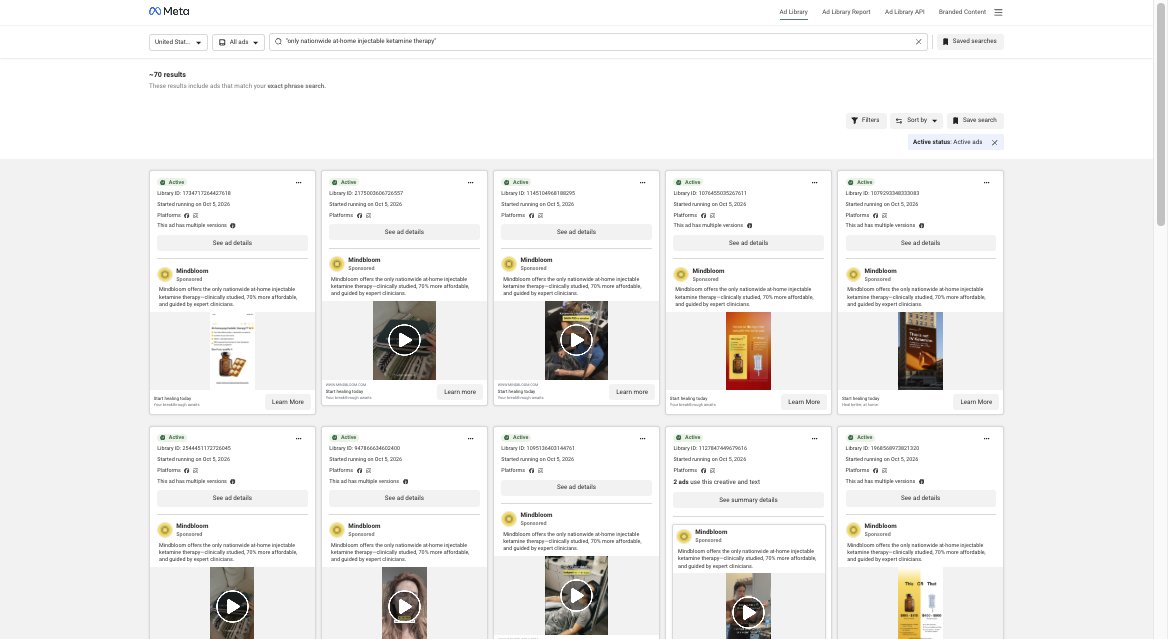
About 70 of them open on the same line: "the only nationwide at-home injectable ketamine therapy." That’s speaking mostly to someone who's already familiar with ketamine.
Now if we look at who actually buys… A lot of them spent ten, twenty, thirty years on antidepressants before anything worked. Before they found Mindbloom, they weren't shopping for ketamine. They were shopping for something, anything that would actually help.
Two of their 91 ads speak to that person.
(I'll show you what I'd make for them further down.)
Your ideas are so smart… they are stupid AF
The usual answer to "we need new customers" is to get creative. But being creative is a waste of money 99% of the time. People don't buy ideas. They buy their way out of a feeling they can't stand any more.
Take home security. On paper, the reason to buy is obvious: it’s a deterrent against break-ins. But most people never get robbed, and somewhere in the back of their head they know it. So when they see a ‘protect your home’ fear ad, they scroll right past.
What’s funny though… is that cameras are cheap now, so people buy them anyway. Just not for burglars.
They buy to see when a package comes. To check the kids got home. To see what the dog's up to while they're stuck at work.
Hell yes. ADD TO CART. BUY NOW!
But survey them and they’ll tell you the opposite. “Deterrence.” “Keeping the home safe.” That’s the reason they tell themselves. The package being delivered, the kids arriving home, and watching the dog are the reasons they bought.
Same product… different moments… a whole new set of buyers. That's a TAM expander.
These moments are terribly hard to guess from the outside. Even my own purchases make no sense. If I didn't have a wife and kids, I'd be eating my favourite pizza at Rosso Pomodoro every other day and bingeing old movies. Instead we're alcohol free, gluten free, screen free… barefoot running shoes (vomit face)… lol. Nobody would guess what I buy. Including me.
And finding those moments by brainstorming is impossibly difficult.
Most "research" doesn't find them either. It's Reddit… scraped with AI. It's copying competitors. It's fifty concepts thrown at the wall.
Meanwhile, that someone complaining on Reddit and the customer who actually bought your product are NOT the same people.
The stuff people will never say out loud
This is the kind of research that sits behind offers doing 1,000 buyers a day. It's what people don't want to admit. The things that keep them up at night.

The woman whose hip feels twenty years older than she is. She plans every trip around how far she'll have to walk. Then she stops going out. And the day she has to ring her husband and ask him to leave work and come and get her, because she can't make the last 500 metres home, the guilt hurts her even more than the hip.

The nice guy who turns up at her door with flowers, and sees another man standing behind her, half naked. He did everything right, and some other guy swooped in.

The wife whose husband is sitting right next to her and isn't really there any more. He’s suffering, she’s suffering. And there’s no one that knows what they are going through.

The parent whose child has meltdowns and destroys the house, bangs his head on the floor, sleeps thirty minutes at a time, and is on so many prescriptions that they've lost all hope.
Not one of those people is looking for your product. Every one of them would stop scrolling for an ad that showed them that moment.
That's your new market. That's your backup million-dollar ad.
And it’s not a hypothesis. One founder watched a colleague stare at their pet cam in a panic. Their dog was having an anxiety attack. “This isn’t normal,” the colleague said, and rushed home. That one moment turned into a $300k/month dog bed brand.
The woman with the hip came out of a "why did you buy?" survey I designed and ran. 659 buyers of a menopause product answered. Here's some of what they wrote:
"I'm sick of feeling 96 when I'm only 54."
"My wife has struggled with hip pain and diminished libido."
“My hips hurt at night and I’m fat and bloated. I’ll try anything that might help. I’m so fed up”
“I stopped drinking alcohol over 3 years ago, but crave sugar in a way I never have before.”
Plenty of other answers I won’t quote here. Dryness. Sex drives gone. Things going wrong “down there” that they’ve never told a friend, typed into a survey for a company they’d never met.
And this one: "Because your advert made me cry. Every bit of it is my experience and my world feels small and like I'm coping at 60% of what my life was like."
That’s the person you're speaking to... with an ad that makes them feel seen before they’ve even thought about your mechanism, ingredients or clever product name.
Saving money didn't convert. Shame did.
Chris Haddad, one of the best emotional storytellers in direct response, wrote a post in the Nothing Held Back Facebook group about the moment that changed everything for him.
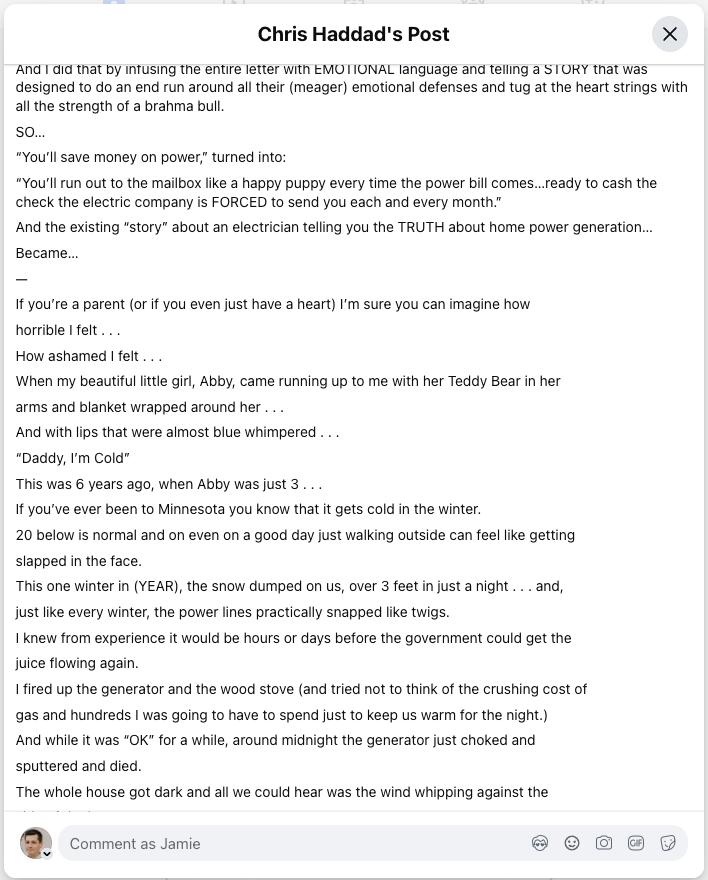
It was 2010, and he was still freelancing. A big marketer you've never heard of had a "make your own power from home" VSL called Power4Home. It was doing OK, but nowhere near well enough to scale. Haddad says his rewrite doubled conversions, took it to number one on ClickBank for more than a year, and earned him more than $400,000 personally.
He didn't change the product or even look at it. He changed what the VSL was about.
The original was all logic: how the grid works, how you're billed, what solar does to your bottom line. People don't care about saving money. They care how it makes them feel, and how their wife and family see them.
He already knew it wasn’t the hippy environmentalist buying. It was the conservative man around 50, from the survival niche, who doesn't trust the government and wants to look after his own. So he rewrote the story around one moment.
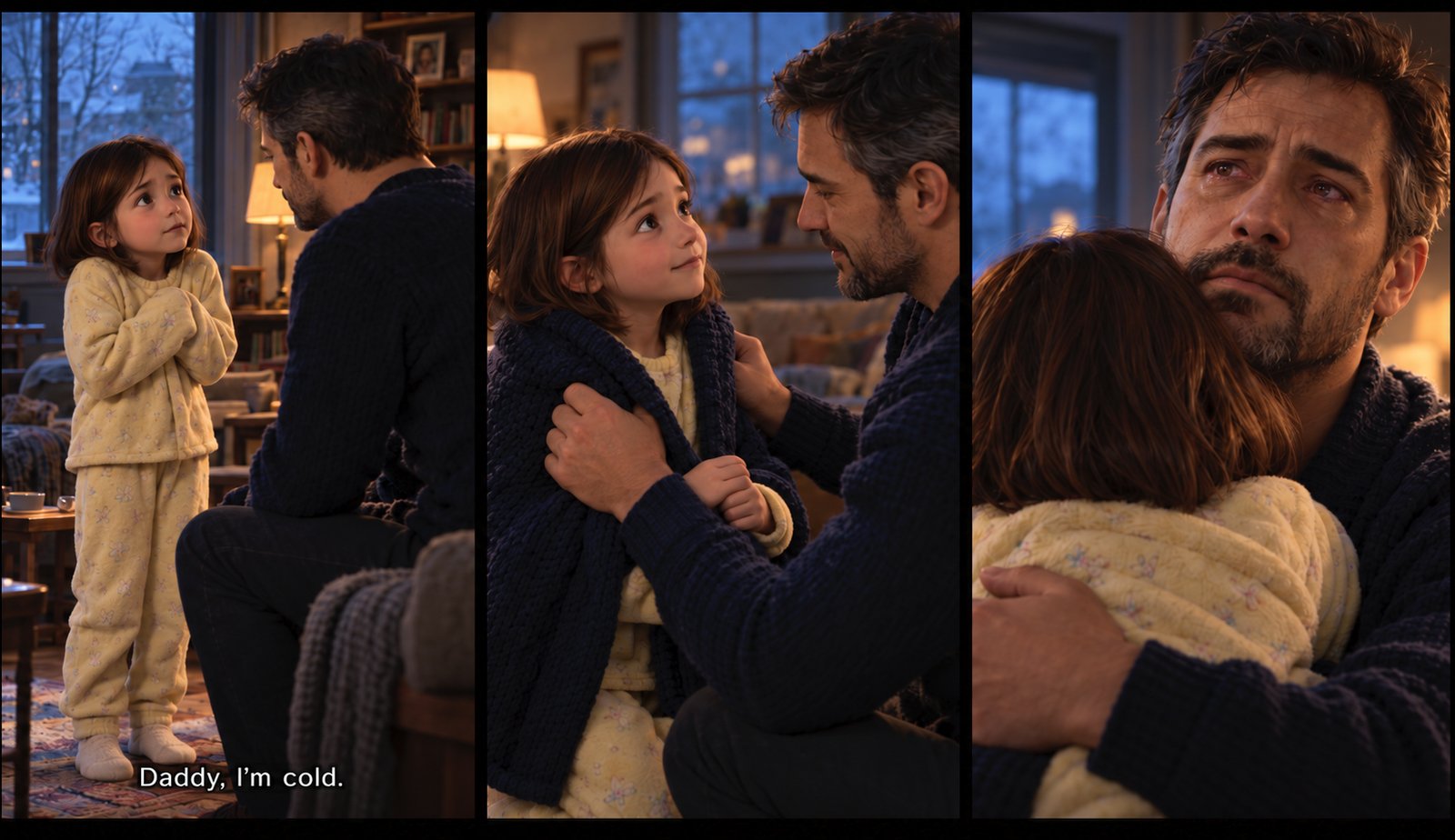
His little girl comes running up with her teddy bear and a blanket around her, lips almost blue: "Daddy, I'm Cold."
In Haddad's words, the VSL stopped being about saving money and became about masculine shame. Failing as a father. Failing as a husband. Failing as a man.
"Saving money" was still in the headline. It just wasn't what the VSL was about any more.
Haddad found that moment by instinct. He says he rewrote the whole thing in six hours. Caleb found his with a phone and zero idea about the market. You don't need to be Haddad. You can do it Caleb's way.
Two ways to find your million dollar ads
Gary Halbert put it best. Ask him what advantage he'd want if he were going head to head with you selling hamburgers, and he'd skip better meat, better location and lower prices. He'd say: "The only advantage I want is… A STARVING CROWD!"
The people in that crisis moment are your starving crowd. And your business is already sitting on them. The people who bought, and maybe more importantly, the people who almost bought but stopped. And if you're ecom, you've got more of them than anyone, and you need them more than anyone, because you win on scale and scale only works while new customers keep coming in.
Method 1: stupid simple
Ask your customers why they bought. Call them, like Caleb did, or send a one-question "why did you buy?" email to every new customer. Then shut up and read.
That's where the 659 answers in my survey came from.
Method 2: harder, but it pays for itself
Call your abandoned carts. These people wanted it enough to get to checkout, then didn't buy. Find out why. Didn't trust it? You’re too new? Too complicated? Lana Sova works with a 9-figure ecom brand that does exactly this. Real people call within a minute of the cart being abandoned. Not to sell. To understand. She says they recover $200K to $450K a week, and the calls give her more material for ads, advertorials, and sales pages than anything else.
Then you take what you've found, find the crisis point, open on it, and build the ad.
Those are your "God f***ing damn it" ads
Here's the killer line of another of Haddad's VSLs. It was doing around 700 sales a day when he talked about it:
"He kissed me like his sister and I knew I was alone again."
There's no backstory or build up. You’re thrown into the worst moment of her life before the sentence ends, and every woman who’s felt a man go cold knows it’s about her.
That's the moment we want in our ads: the moment of crisis. Haddad has a name for it. It's when the character hits the wall and thinks: "God f***ing damn it. I can't do this anymore."
Open there. Then go back and show how they got there.
And look at who’s to blame in each line. In the kiss line, he went cold and she’s the one left hurting. She gets sympathy. In “Daddy, I’m Cold,” he’s the one who failed his little girl. He gets the shame. Does your customer need sympathy? Or do they need to be made to feel like shit? That's where the testing gets done.
Then there's the turn. In "Daddy, I'm Cold", the generator dies, the family huddles by the wood stove, and his daughter whispers, “Daddy, make it warm again.”
Then it lands: “I was her dad. I was supposed to protect her.”
Power stops being a bill and becomes his job.
Only then does he go looking for an answer. (Matthew Dicks calls that the five-second moment in his book Storyworthy: the moment you see the world differently.)
That's what we're after. Small, everyday moments people recognise.
Not the time you got blind drunk, stole a car and woke up in a garage in a puddle of blood. (Jeez! Don't do that bro.) Tucker Max was fun to read, but come on… nobody relates to those stories and is urged to buy something.
In an ad, that's the realisation that makes your product make sense. The character sees their problem differently, and only then does the product show up.
Remember Mindbloom's missing customer? Here's what I'd make for them.
Nothing else worked

"The new psychiatrist asked what I'd already tried. My list went onto a second page."
Grief

"Two years after my son died, every photo of him in our house was still turned face down."
Bad enough

"I sat in the car park for forty minutes, telling myself other people have it worse."
None of them mention ketamine, prices, or being the only at-home option.
Three ads I built this way
Iason Ioannis and Matthew Volkwyn, two of the sharpest creative strategists I've learned from, rate Pixar-style dramas as about the most proven format going right now, with AI songs close behind.
But everything fatigues eventually. And everyone has noticed. Degenerates and big brands alike are exploiting the crap out of it, which only speeds it up.
Anyone can copy a format. Nobody can copy the insight underneath it. And most brands are filling it with the same promises they were already making (or some really insane shit that is going to get them in trouble -- lol -- you know the ones). These are concepts I built on spec, so no results to show yet, just the thinking.
Ad 1: Mars Men, "Guilt"
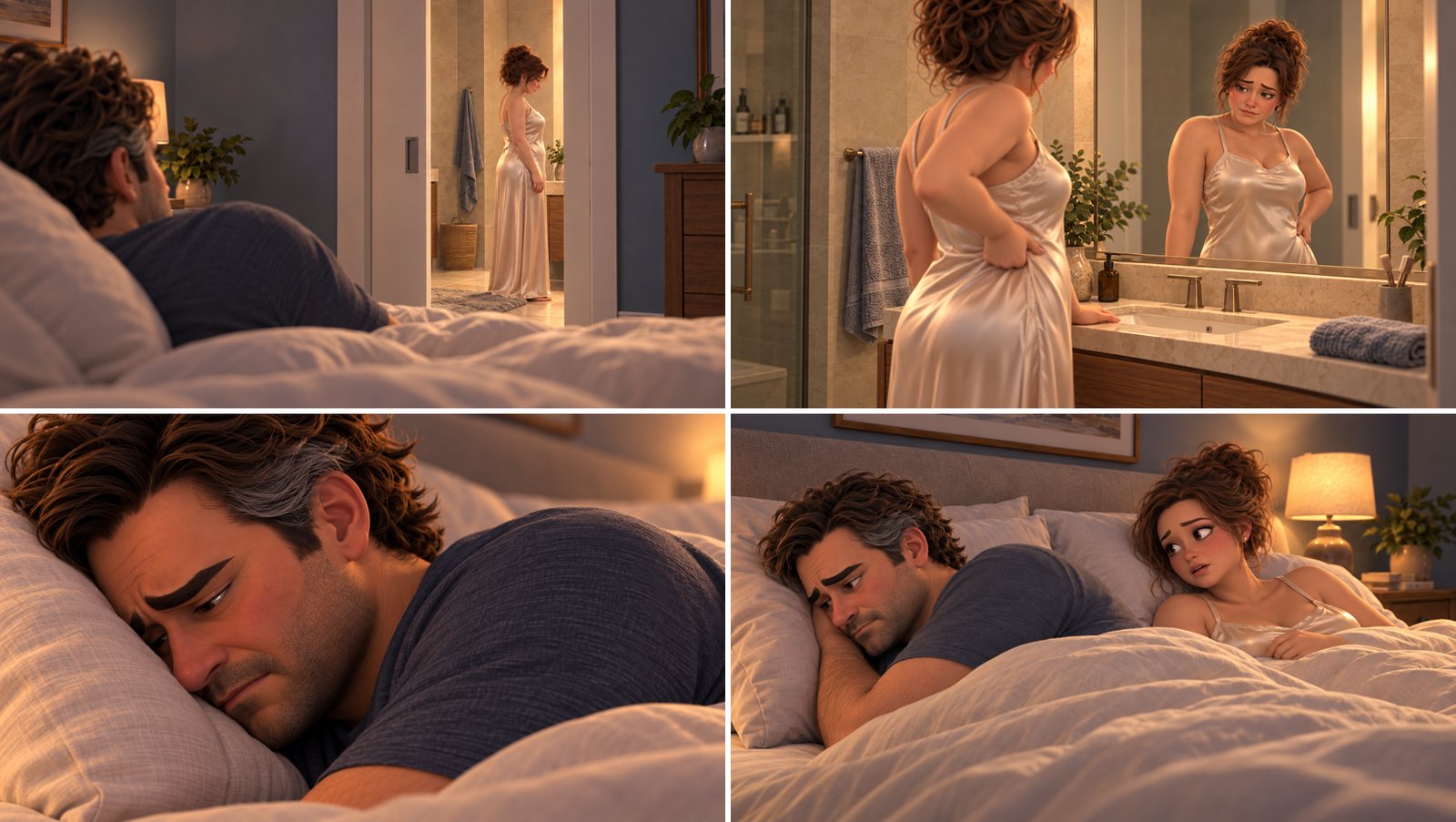
The crisis opener: we start on her self-blame, not his symptoms, because guilt is the buying motive nobody in the category talks to.
It opens on the worst night. Her at the bathroom mirror, in the silk nightie she wore for him, wondering what's wrong with her. Him face-down in the pillow, saying nothing. From the bathroom: “It’s okay.”
Then back in time.

Back in time, then the slide: carrying her to bed at twenty-five, her first bump, laptop light at midnight, a date night that feels like a way back.
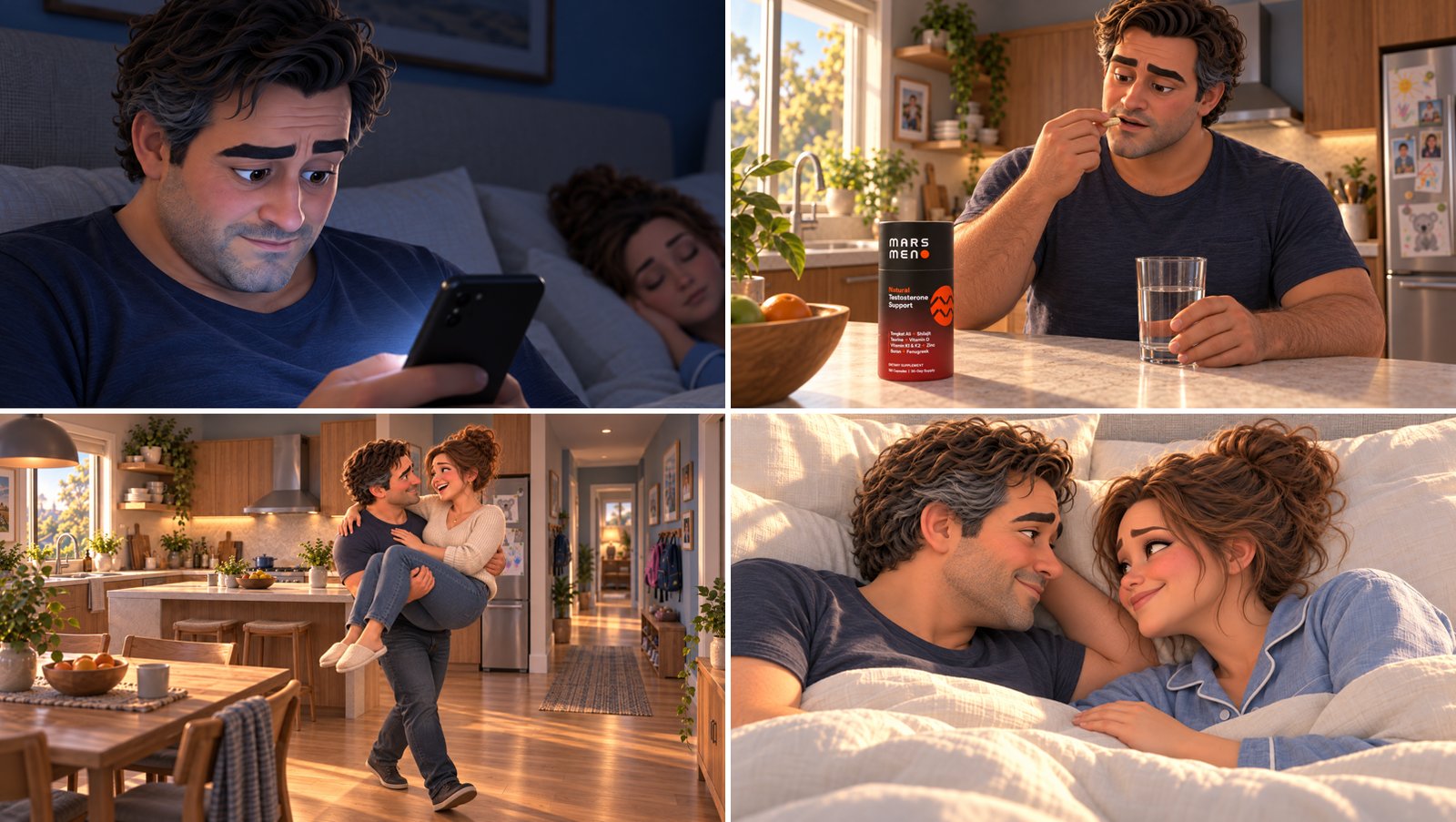
The turn, then the product: 3 a.m., it lands: he's not broken, he's run down. Mars Men shows up only after that, inside a new routine.
Mars Men makes a natural testosterone-support supplement. A dad letting his wife believe it’s her body. That’s Caleb’s phone call research, two decades later, just presented in the Pixar ad format. Three hook variants:
“My wife thinks it’s her body. I’ve let her believe it for two years.”
“She cried in the bathroom last night because she thinks I don’t want her. I do… But I can’t.”
“Every time she says ‘it’s okay’, she means ‘is it me?’”
Ad 2: Mars Men, "Sorry Babe"
Same idea. The same guilt. But moving away from the drama to a funny catchy song. The punch is the truth nobody says out loud, and sometimes the best way to convey this is with a joke.
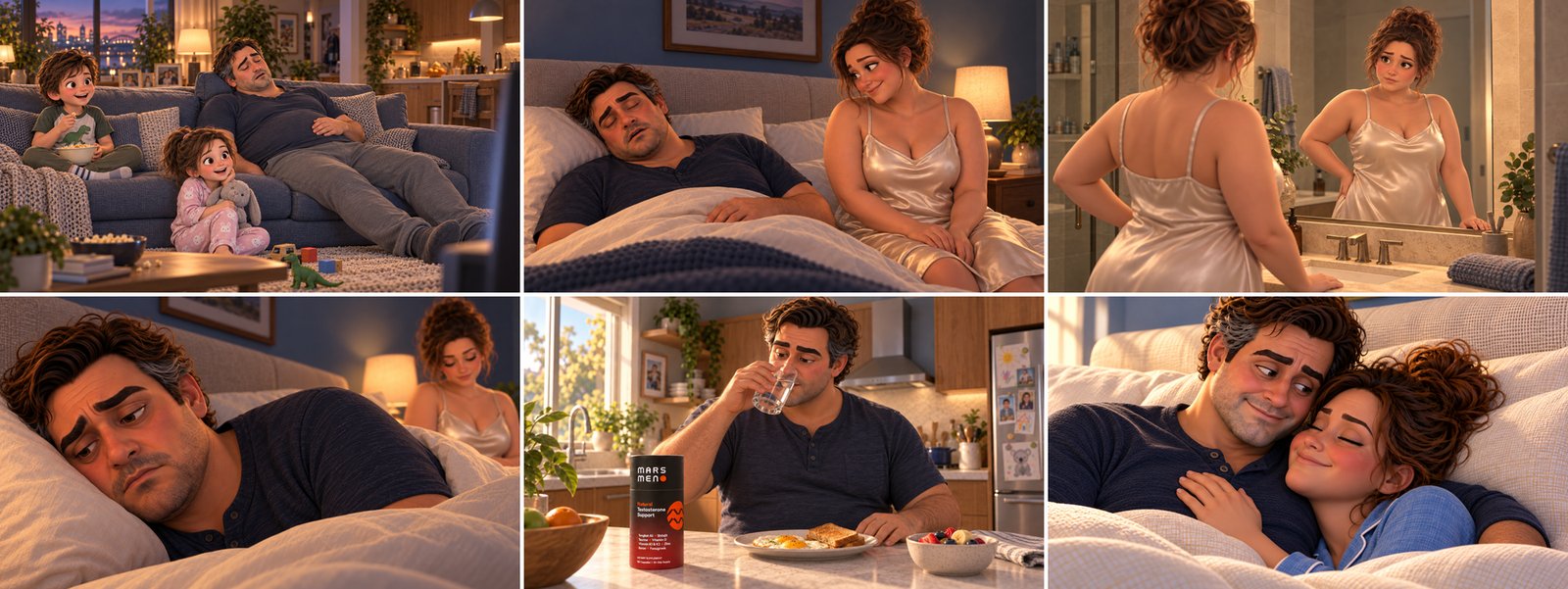
I'm sorry, babe / It isn't your body / My battery's in the red
That's the whole "Guilt" drama in twelve words, inside a song you'd hum. And look at who can buy from it. He can. And so can she. The wife who's spent two years wondering if it's her hears a song telling her it never was her, and buys it for her husband. When I went through 59 of Mars Men's ads in September, every one was written to him. Not one ad talks to her, which is very normal but a potentially missed opportunity because women buy most household items.
Ad 3: Tina Su, "Used To Have…"
Tina Su runs Hi Mama, a programme for parents of children with autism and ADHD. I made this ad for her as a gift, after hearing her tell her son's story on Alex Hormozi's show Scale or Fail.
She wasn't recording an ad. She was being coached on her business. She started telling her son's story, and told it beautifully.
That's the audio. Her voice, unbroken, start to finish.

Same parent, two openers: her live ad calls out parents and says "This is for you." Mine opens on her voice: "My son used to have autism, ADHD, and epilepsy." The same parent is qualified just as fast, but it hits them in the stomach first.
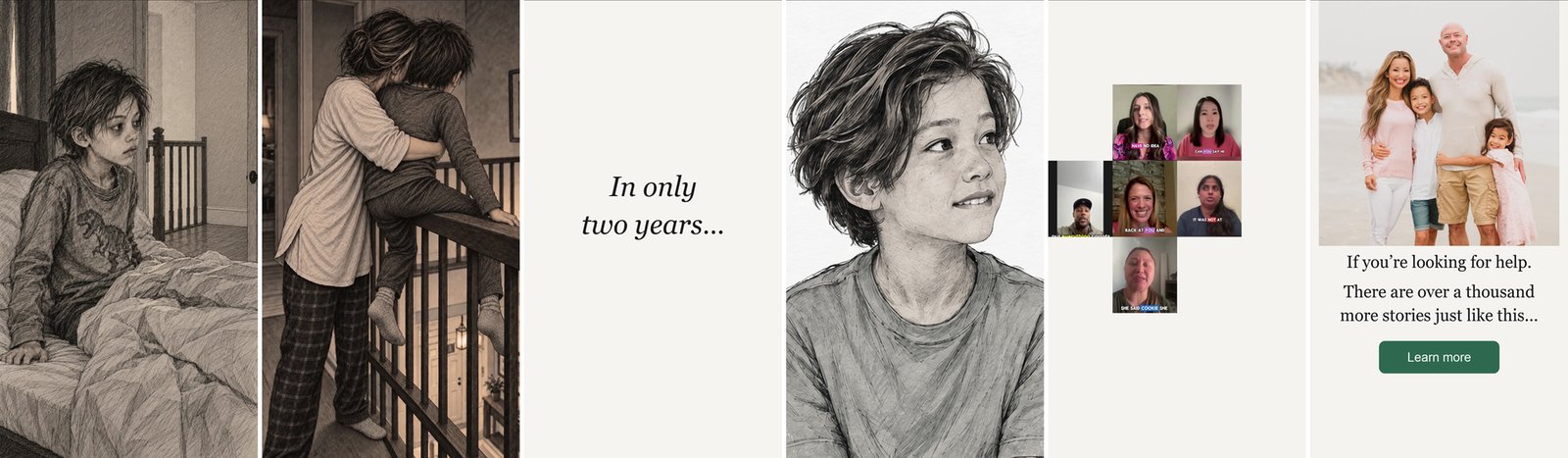
No colour until there's some hope: scratchy pen and ink for the worst of it, three seconds of silence when she can't finish "in only two years…", then real footage of him hugging her, real parents, and the call to action.
Come at me with your best proof
Go and look at the Ad Library for half an hour. The feed is full of magic pills wrapped in beautiful stories.
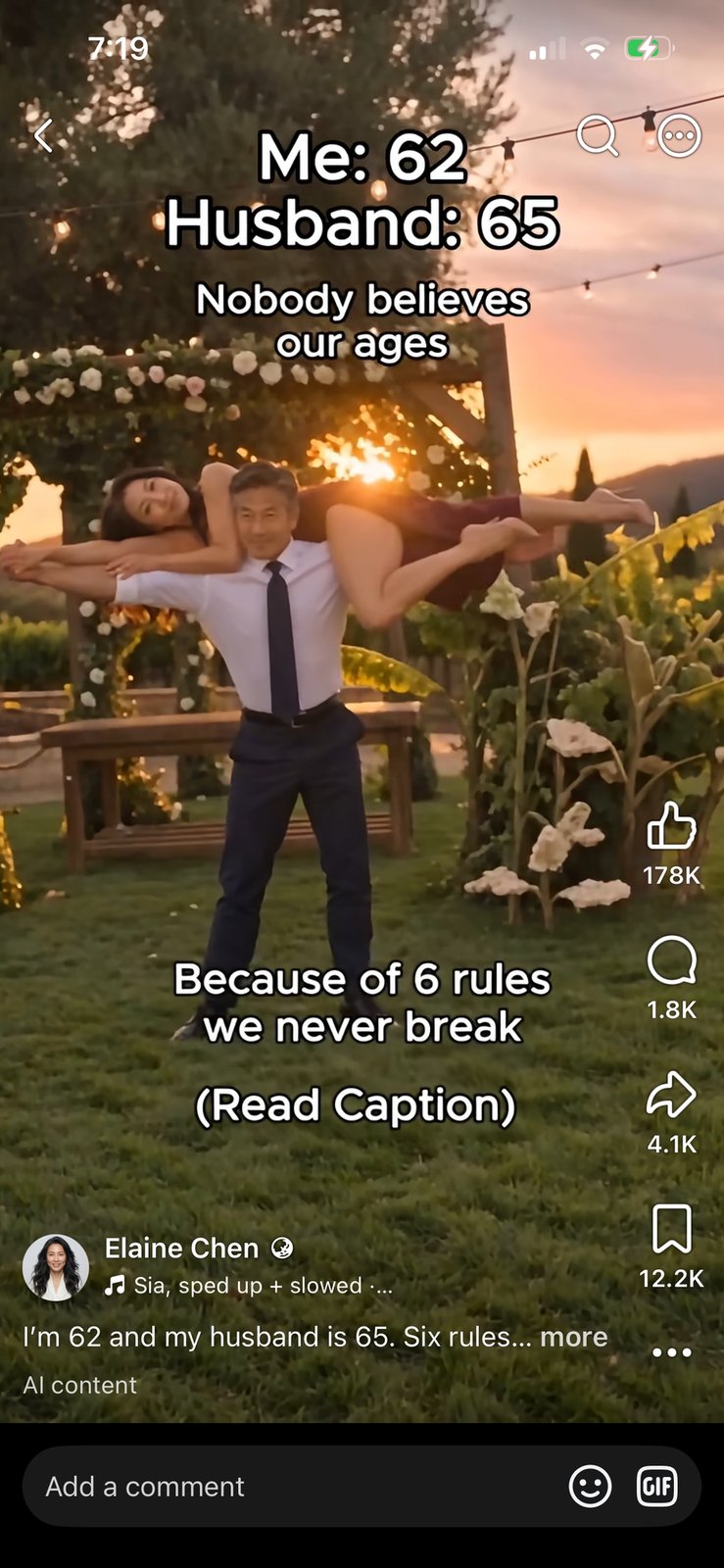
A woman with flawless skin looks into the camera and says "I'm 62." She's a F—ing AI avatar. And the comments are full of people who believe her. o.O
Weight-loss drops that melt fat while you sleep (ridiculously non-compliant claims!!!).
Doctors who don't exist, pulling in millions selling GLP-1 drugs.
And miracle pain cures that somehow rebuild your joints, like you've turned into a lizard growing back its tail.
The emotional techniques in this article work just as well for a scam as for a real product. Put a gut-punch story on top of a product that doesn't work and you'll sell plenty… for a while. Then come the refunds, the chargebacks, the account bans, and a market that stops trusting anyone.
I've no interest in helping build that.
What I'm after is the rarest thing in this industry.
PROOF. If you've got a great product, one that does what it says, with customers who'll tell you so without being bribed, then emotion is how you scale it.
Please don't reach out if:
Your ads promise to dissolve a pound of fat a day.
You sell a probiotic with zero probiotics in it, and it's really just an insanely high dose of melatonin to knock the dog out.
Your label says "Made in the UK" or "Made in the USA", and it's made in a factory in China and relabelled.
You've changed your company name three times to reset your Trustpilot reviews.
Your doctor is a stock photo. Or an AI face in a white coat.
These days I want to make TOFU creative for brands I like: the ads that bring in people who've never heard of you, so your account stops living on one or two winners. My ideas will come from your business and potentially from reworked versions of winners from the '90s and 2000s. Happy to start on iterations of your current winners if that’s what you need… But I want to open up the new markets for you.
So here's my ask.
Come at me with your best proof. Customer outcomes you can show me. Your reviews and testimonials. A founder who'll set up a way to get their team on the phone with customers.