What goes to the editor
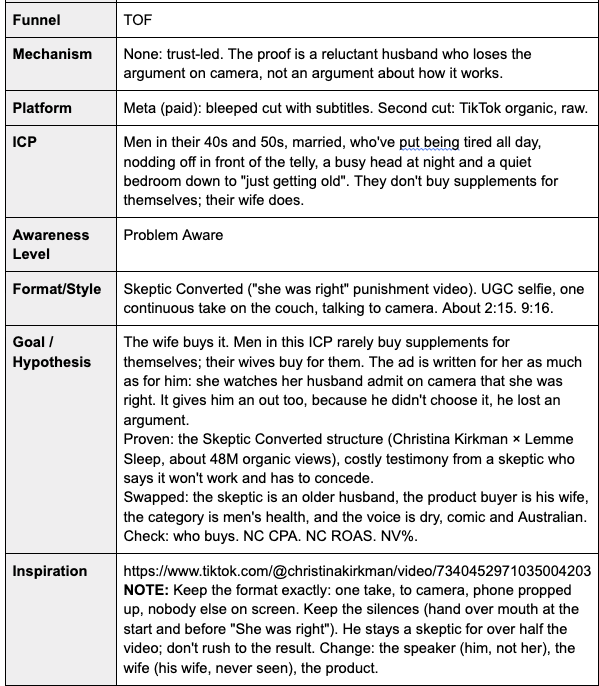
The idea is the expensive part. The brief makes sure it survives the handoff: your editor, animator or UGC creator knows what has to stay, what they get to decide, and why the ad exists at all.
One brief per ad. Top half is a table of decisions. Bottom half is the hooks and the script.
What each row is for
| Row | What it tells the editor | Why it matters to you |
|---|---|---|
| Concept name | BRAND_ |
You can find it, report on it, and see which idea won. |
| Funnel + Awareness | TOF, and how much the viewer already knows | A cold viewer needs a different first three seconds than someone who's seen you before. |
| ICP | One specific person, in a scene. "Asleep on the couch by nine, three coffees by lunch." | The editor casts and cuts for that person, not "men 35–55". |
| Mechanism | Why it works, in the brand's own approved words | No made-up science on screen. |
| Goal / Hypothesis | Proven: what's borrowed from something that already worked. Swapped: what I changed. Check: the numbers that decide it. | Every ad is a bet. This says what the bet is, so even a loser teaches you something. |
| Inspiration + NOTE | The source ad, plus exactly what to keep and what to change | Stops anyone "improving" the structure (see 1. Keep your winners alive). |
| Character, V.O., Music, Subtitles | Casting, voice, sound, captions | The tone gets decided once, up front. |
| Notes | Compliance lines (what can't appear on screen), and the live offer and CTA | Keeps the ad out of Meta jail and the brand out of trouble. |
| Compliance status | Awaiting brand review → ✅ | Nothing goes live until you sign off. |
Hooks and script
-
Three hooks, each with a written hook visual. The hook is the most important visual. It has to stop the scroll.
-
General visual instructions at the top of the body: what's locked and what the editor decides.
-
The script as a table, beat by beat: what each section is for, then the final words.
Who decides what
Locked by me: the idea, the beats and their order, the words, the compliance lines.
The editor's call: framing, where to cut, caption style. On animated ads, the shots themselves ("you lead on visuals").
Three real briefs: Five Pills / Call-In / Sorry Babe.